
Practice Areas / Business Law
The general counsel
most small businesses
don't have.
Entity formation, operating agreements, governance, contracts, and employment — handled by an attorney who's also been a VP and COO, with the operator's perspective that comes with it.
Counsel that fits a small business
Most small businesses don't need a general counsel on payroll — but they regularly need one on call. That's the relationship the firm offers: fixed-fee work where it makes sense (formations, operating agreements, employee handbooks), and accessible hourly counsel for the rest.
Jennifer's career has spanned both sides of the table — as an attorney in private practice and corporate counsel, and as a VP and COO running the businesses on the other end of the legal questions. That perspective shapes the work.
Your business journey, mapped.
From the first idea to the eventual heritage, a business has legal needs that change at every stage. Our practice is built around the whole arc — not just the formation paperwork.
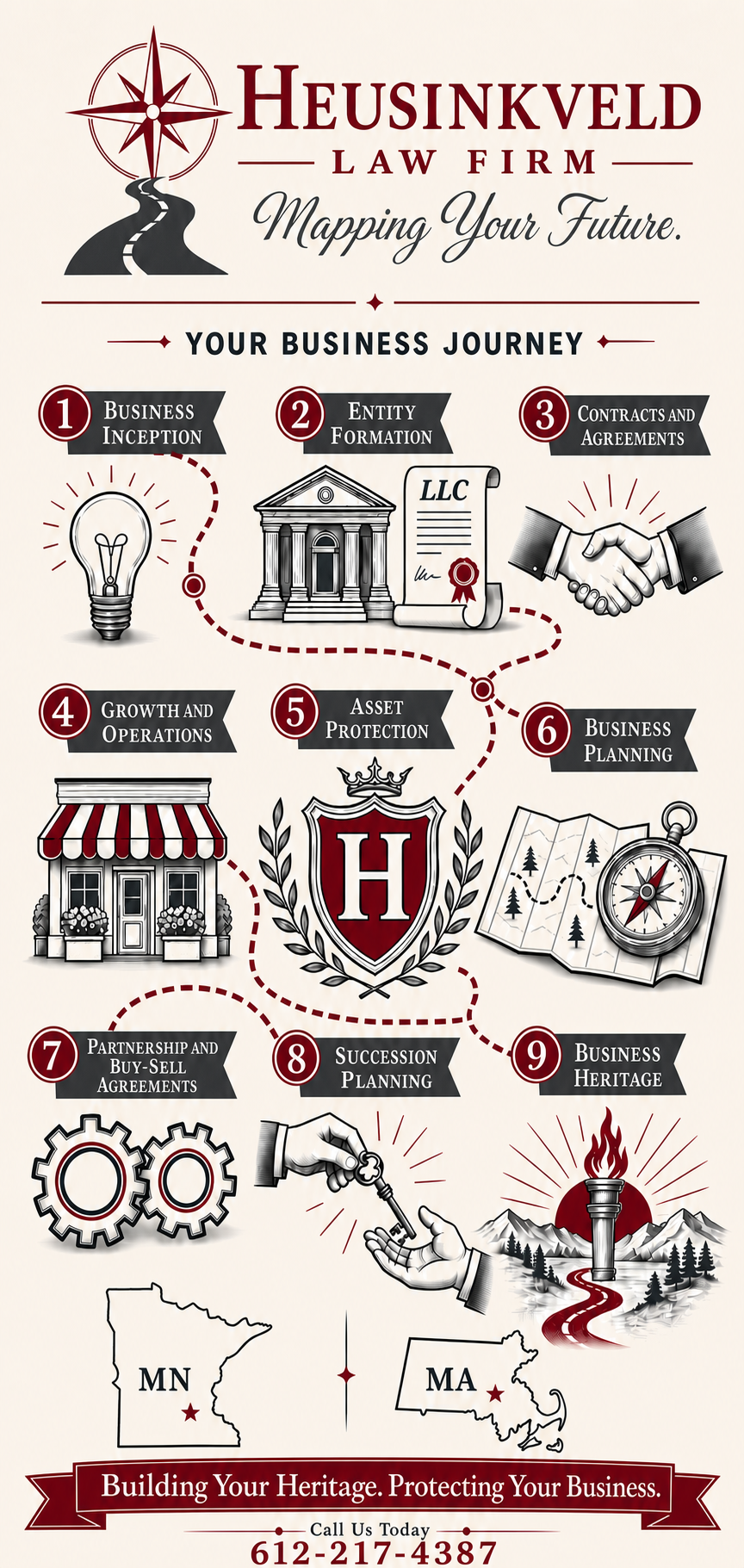
Formation & governance
- Entity selection — LLC, S-corp, C-corp, partnership: choosing the form that fits the business, not the form that's trendy.
- Operating agreements & bylaws — drafted to fit how the business actually runs and how the owners actually agree (and disagree).
- Member/shareholder agreements — buy-sell provisions, transfer restrictions, valuation methods, deadlock resolution.
- Annual maintenance — keeping the corporate veil intact with proper minutes, resolutions, and filings.
Contracts & commercial
- Customer & vendor agreements — master services agreements, statements of work, terms of service, sales contracts.
- NDAs & confidentiality — bilateral and unilateral, with terms that actually protect what they say they protect.
- Independent contractor agreements — properly classifying the relationship and protecting the work product.
- Contract review — second-set-of-eyes on the agreement someone else drafted, before you sign it.
Employment
- Employee handbooks — up to date with Minnesota's evolving requirements (ESST, PFML, breaks, wage notices, and more).
- Offer letters & employment agreements — at-will status, restrictive covenants where enforceable, IP assignment.
- Compliance counseling — federal and Minnesota wage-and-hour, classification, leave, and accommodation questions.
- Separations — severance agreements, releases, and termination guidance.
Transactions & exits
- Asset and stock purchases (buy and sell side)
- Succession planning and ownership transitions
- Equity grants, vesting, and ownership restructuring
- Coordinating with accountants, financial advisors, and lenders
Also Practice Areas